

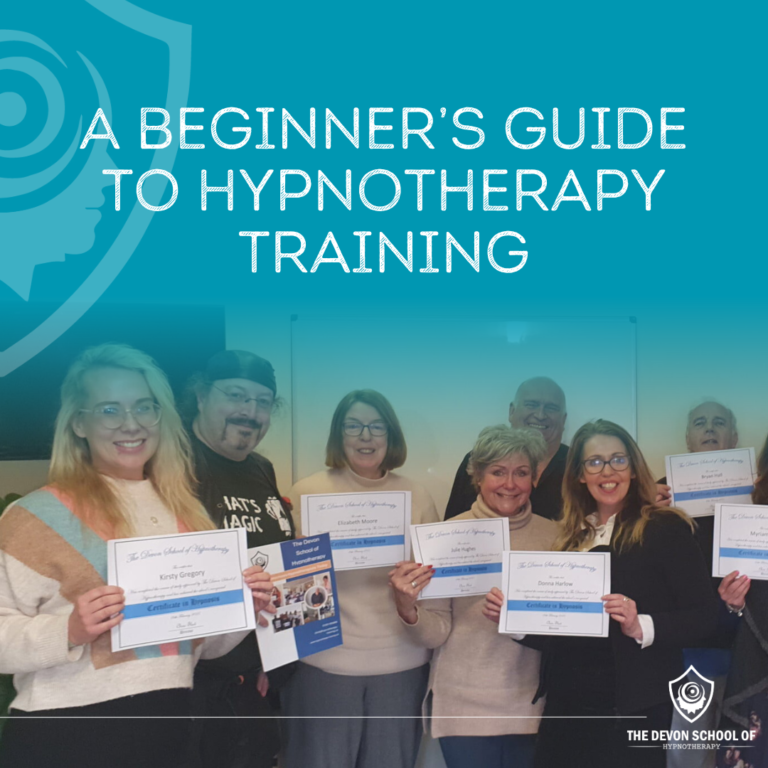
If you are curious about hypnotherapy but unsure where to start, you are not alone. Many people are drawn to the idea of helping others through hypnotherapy yet feel uncertain about what the training actually involves, whether they are suitable, or what happens after qualification. This beginner’s guide is designed to give you a clear and grounded understanding of hypnotherapy training in the UK so you can make an informed decision with confidence.
What hypnotherapy actually is
Hypnotherapy is not about losing control, being unconscious, or having someone else take over your mind. In practice, it is a collaborative process where focused attention is used to help people work with thoughts, emotions, habits, and responses that may feel difficult to change at a conscious level alone. People remain aware and able to communicate throughout.
In real world settings, hypnotherapy is often used to support clients with anxiety, stress, confidence issues, phobias, habits, pain management, and emotional patterns rooted in lived experience. It is practical, human, and relational rather than theatrical or mysterious. Understanding this reality is an important first step for anyone considering hypnotherapy training.
Who hypnotherapy training is suitable for
Hypnotherapy training is suitable for a wide range of people, not just those from therapy or psychology backgrounds. Students often include career changers, people already working in helping professions, coaches, counsellors, and individuals drawn to personal development and meaningful work.
You do not need to have all the answers or a certain personality type. What matters most is an interest in people, a willingness to learn, and the capacity to take responsibility for working with others. Training is as much about personal awareness and emotional steadiness as it is about techniques.
What training involves in practice
In quality hypnotherapy training, learning goes far beyond scripts and inductions. Students learn how hypnosis works, how to communicate safely and clearly, and how to respond to real human experiences rather than idealised case studies.
Practical training typically includes live demonstrations, supervised practice, discussion of client scenarios, and guidance on ethics, boundaries, and professional responsibility. Students are taught how to think as hypnotherapists, how to assess situations, and how to adapt their approach rather than rely on rigid methods.
This kind of training reflects how hypnotherapy actually works with real clients in real situations, not just how it looks in theory.
What students often worry about before starting
Many beginners share similar concerns before starting hypnotherapy training. Common worries include fear of not being hypnotisable, anxiety about working with people, concern about confidence, or uncertainty about whether they will be good enough.
These worries are normal and expected. Good training acknowledges them openly and helps students build confidence gradually through understanding, experience, and support. Confidence does not come from pretending to know everything. It develops through learning how to stay calm, present, and thoughtful when working with others.
Chris’s approach to training and why lived experience matters
Chris’s approach to hypnotherapy training is shaped by years of working with people in real and sometimes challenging situations. This experience informs how students are taught, with a strong emphasis on responsibility, emotional awareness, and realistic expectations.
Rather than focusing solely on techniques, training encourages students to understand people, context, and the subtleties of human behaviour. Lived experience brings depth to teaching, helping students recognise that hypnotherapy is not about performance but about presence, safety, and clear thinking.
Students are supported to develop judgement, adaptability, and self awareness so they can work ethically and effectively with clients rather than rely on formulaic approaches.
What happens after training
After completing hypnotherapy training in the UK, many graduates go on to set up private practices, integrate hypnotherapy into existing work, or continue with further professional development. Others find the training valuable for personal growth and improved communication, even if they do not practise immediately.
Ongoing learning, supervision, and reflective practice are part of working responsibly as a hypnotherapist. Training provides the foundation, but growth continues through experience and continued support.
Final thoughts
Starting hypnotherapy training can feel like a big step, especially if you are new to the field. With the right guidance, it becomes a grounded and empowering process that builds clarity, confidence, and real understanding of how to work with people.
Thinking about training in hypnotherapy? Our introductory courses are designed to help you decide with clarity and confidence.